When a cesspool starts failing, the first question homeowners in Babylon, Smithtown, Islip, and across Long Island ask is: how bad is it? The answer depends on what’s actually wrong — and a lot of cesspool problems that look catastrophic are actually fixable.
Here’s how to think through repair vs. replacement so you’re not spending when a fix would have done the job.
Problems That Can Usually Be Repaired
Broken or Missing Baffles
The inlet and outlet baffles direct flow inside the tank. When they crack or fall off, solids escape into the leaching pool and clog it. Baffle replacement is a straightforward repair — the tank stays in place, the technician accesses it from the top and installs a new baffle. Cost: typically varies by job.
Damaged or Sunken Lid
Cesspool lids take years of ground pressure and sometimes crack or sink below grade. A cracked lid is a safety hazard and can let surface water in, disrupting the system’s bacterial balance. New lids and risers are inexpensive — usually varies by job — and can be installed in an afternoon.
Clogged Inlet or Outlet Pipe
Tree roots are the most common cause of pipe blockages on Long Island. Roots grow toward water and moisture — and cesspool pipes are a reliable source. Root cutting followed by high-pressure jetting clears most blockages without excavation. If the pipe is crushed or collapsed, it may need to be replaced — but that’s still a repair, not a full system replacement.
Leaching Pool That Needs Rejuvenation
A leaching pool that drains slowly isn’t always dead. Sometimes it’s just compacted or clogged with grease and solids that built up because the main tank wasn’t pumped often enough. A pump-out plus hydro-jetting of the leaching field restores flow in many cases. It’s worth trying before committing to replacement.
Problems That Usually Require Replacement
Collapsed Tank Walls
Older concrete cesspools — especially those from the 1960s and 70s — can crack and collapse under ground pressure. A partially collapsed tank can sometimes be relined, but a fully collapsed one needs to come out. Your technician should show you what they found before recommending replacement.
Completely Failed Leaching Field
If the soil around the leaching pool is permanently saturated and biomat-clogged, no amount of jetting will restore it. This typically happens after years of neglect — solids overflow from an unpumped tank and seal the soil. At this point, a new leaching pool in a different location is the only fix.
System at End of Lifespan
A well-maintained cesspool on Long Island lasts 30 to 40 years. If yours is older than that and showing multiple failure points simultaneously, repair costs will outpace replacement value quickly. In that case, full replacement with a modern system is the smarter investment.
The Key: Get an Honest Assessment First
The problem is that some contractors default to replacement because it’s a bigger job. Before agreeing to a full replacement, get a second opinion — ideally from someone who didn’t sell you on the diagnosis.
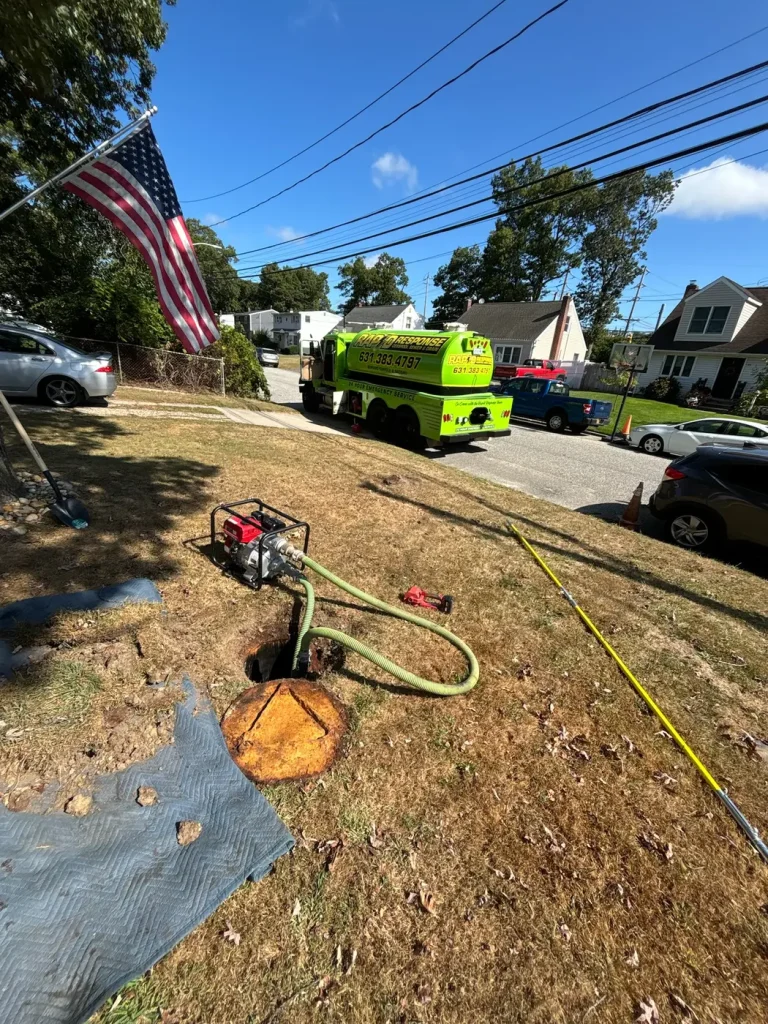
At Rapid Response Cesspool, we assess the system, show you what we found, and tell you honestly whether repair or replacement makes more sense. We don’t upsell — if a repair fixes it, that’s what we recommend.
Call for a free on-site assessment anywhere in Nassau or Suffolk County.