If you own a home on Long Island, understanding your wastewater system is essential for proper maintenance and avoiding costly emergencies. Many homeowners in Nassau County and Suffolk County don’t know whether they have a cesspool or septic system—and the difference matters. These two systems operate differently, require different maintenance schedules, and have distinct legal requirements in New York State.
This guide will help you identify which system your Long Island home uses and explain what that means for your property.
What’s the Difference Between a Cesspool and a Septic System?
Before you can identify your system, it helps to understand how each one works.
A cesspool is a simple, underground pit that collects all wastewater from your home—including toilet waste, sink water, shower drainage, and laundry water. Everything flows into one holding tank where solids settle and liquids slowly seep into the surrounding soil. Cesspools require regular pumping to remove accumulated sludge.
A septic system is more complex. Wastewater flows into a main septic tank, where bacteria break down solids. The partially treated liquid then moves into a drain field (also called a leach field), where it’s further filtered through soil layers before returning to groundwater. Septic systems are more efficient and environmentally friendly, but they also require more maintenance oversight.
The key difference: cesspools are holding tanks; septic systems treat and filter waste before returning it to the soil.
How to Identify Your Cesspool or Septic System
Check Your Property Records and Deed
Start by reviewing your home’s paperwork. Your property deed, title report, or closing documents often mention the type of wastewater system. Look for terms like “cesspool,” “septic tank,” or “septic field.” If you can’t find this information at home, contact your local municipal office in Hempstead, Freeport, Port Washington, or wherever your property is located. Town clerks maintain records of building permits and system installations.
Locate the System Access Point
Walk around your property and look for an underground access cover or lid. These are usually made of plastic, concrete, or metal and sit flush with or slightly above ground level.
For cesspools: You’ll typically find a single access cover or two covers close together. Cesspools are simpler systems, so there’s usually just one main tank.
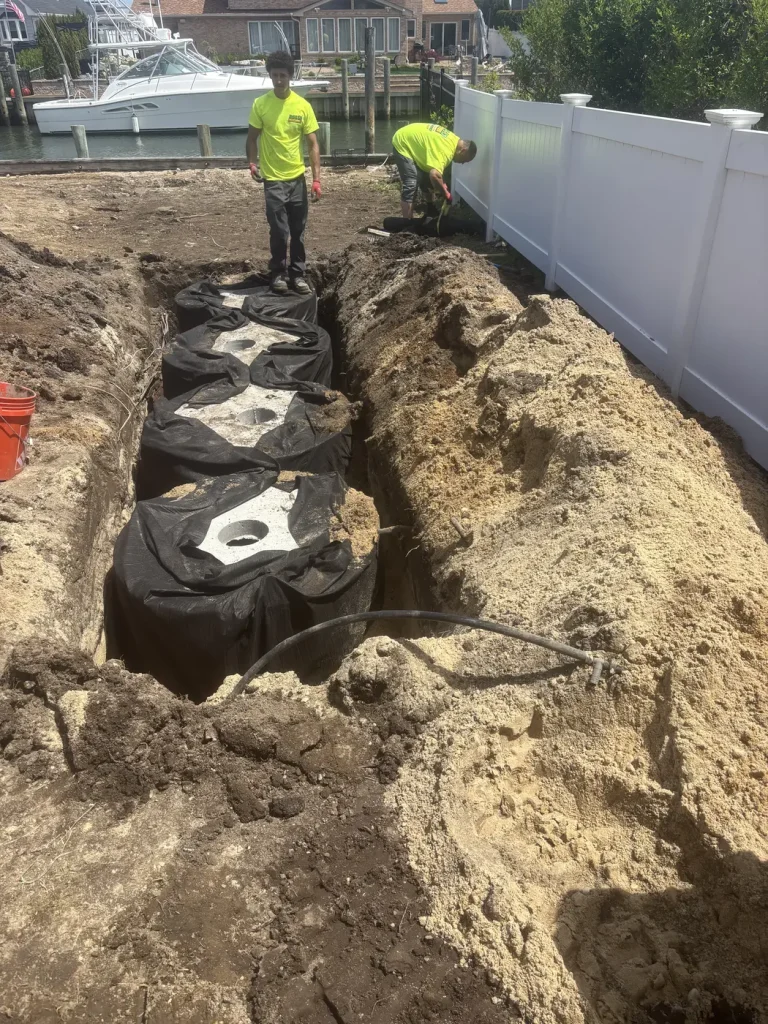
For septic systems: Look for two or more covers spaced across your yard—one for the main septic tank and additional ones for the drain field. You might also notice a clear access pipe or inspection riser.
Be careful when exploring your yard. Don’t attempt to open these covers yourself; they’re often heavy and potentially hazardous. This step is simply about identifying what’s there.
Observe Your Yard Layout
The physical layout of your property can offer clues. Septic systems require a drain field, which is typically a large, relatively flat area where no heavy structures (like sheds or pools) should be built. If your yard has an obvious open area that seems reserved and undeveloped, it may be your drain field.
Cesspools, being smaller, require less space and may be tucked into a corner or side area of your property.
Check Your Septic System Maintenance Records
If you’ve lived in your home for a few years, you may have receipts or records from septic or cesspool pumping. These documents clearly identify your system type and often include details about the tank size and location.
If you’ve recently purchased your home and don’t have records, ask the previous owner or your real estate agent. They may have inspection reports or maintenance history.
Conduct a Visual and Soil Inspection
Septic drain fields often show signs of their presence. In wet weather, you might notice soft or marshy areas in certain parts of your yard. Some homeowners see greener grass over their drain field in summer. These are indicators of subsurface drainage activity.
If you observe consistently soggy soil, foul odors, or unusually lush vegetation in one area during dry months, your drain field may be struggling—a sign you need professional assessment.
Long Island Regulations: Why It Matters
Knowing your system type matters because Suffolk County and Nassau County have specific regulations for wastewater management.
New York State has been phasing out cesspools in areas where public sewer systems are available. Homes on Long Island without access to public sewers are required to maintain either a properly functioning septic system or a cesspool in good standing.
If you discover you have a failing or non-compliant cesspool, you may be required to convert to a septic system or connect to public sewer lines if available. Towns across Long Island—including those in Suffolk and Nassau Counties—have different timelines and requirements for these conversions.
When to Call a Professional
While these steps help you identify your system, a licensed professional can confirm your findings and assess the system’s health. A professional inspection is recommended if:
- You’re purchasing a home and want a pre-purchase inspection
- You’ve never had your system inspected or maintained
- You notice signs of system failure (slow drains, backed-up toilets, odors, or soggy patches)
- You’re unsure about compliance with local regulations
- You’re planning renovations or additions that might affect your system
A professional can use video inspection technology to examine your tank, test soil conditions, and provide a detailed report on your system’s condition and any necessary maintenance or upgrades.
Maintenance Tips for Long Island Homeowners
If you have a cesspool: Regular pumping is essential. Most cesspools need pumping every 3–5 years, depending on household size and usage. Avoid flushing non-biodegradable items, and be mindful of what enters the system.
If you have a septic system: Pumping is typically needed every 3–5 years as well. Additionally, protect your drain field by not driving or building on it, and avoid planting trees with deep roots nearby. Bacterial additives are generally unnecessary if you use the system properly.
Both systems benefit from water conservation. Fix leaking toilets, install low-flow fixtures, and spread laundry loads throughout the week rather than doing multiple loads in one day.
Frequently Asked Questions
Can I convert my cesspool to a septic system?
Yes. Many Long Island homeowners are converting cesspools to septic systems to comply with regulations and improve environmental safety. A licensed contractor can evaluate your property and design a system appropriate for your soil conditions and home size. Conversion requirements and processes vary by municipality.
How much does a cesspool or septic system cost to maintain annually?
Maintenance costs vary based on system type, tank size, and local rates. Regular pumping is the primary expense for most homeowners. Request a free estimate online to discuss your specific situation with a professional.
What are signs my cesspool or septic system is failing?
Common failure signs include slow-draining toilets and sinks, backed-up sewage, foul odors in or near the home, unusually wet or marshy yard areas, and lush patches of grass. Any of these warrants immediate professional inspection.
Do I need a permit to pump my cesspool or septic system?
Regulations vary by Nassau County and Suffolk County municipality. Some towns require permits for pumping and system work; others don’t. A licensed professional will know your local requirements and handle necessary paperwork.
How often should I have my system inspected?
Most experts recommend inspections every 1–3 years, depending on your system age and condition. If you have a newer system in good working order, annual inspections may not be necessary. A professional can recommend an inspection schedule tailored to your property.
What’s the best way to protect my cesspool or septic system?
Avoid flushing paper towels, wipes, feminine hygiene products, or grease. Don’t use excessive amounts of harsh chemicals or antibacterial soaps. Keep heavy vehicles off the area. Plant trees away from your system. And follow a regular pumping schedule. Request a free estimate online to discuss your system’s maintenance plan with a professional who serves Long Island.