We Are There When You Need Us
24/7 Emergency Service (631) 383-4797

Septic Tank Replacement Cost Guide for Long Island Homeowners

Septic Tank Replacement Cost Guide for Long Island Homeowners

Understanding Septic Tank Replacement Cost on Long Island

If you’re a Long Island homeowner, you’ve probably wondered about septic tank replacement cost at some point. Maybe your system’s been acting up, or perhaps you’re just planning ahead. Either way, you’re smart to research this now rather than during an emergency.

Here’s the thing: replacing a septic tank isn’t cheap, but it’s also not as scary as you might think. Most Long Island homeowners spend between $5,000 and $15,000 for a complete replacement. However, that range varies widely based on several factors we’ll break down for you.

We’ve been serving Long Island families for years, and we know this investment can feel overwhelming. That’s why we’re giving you the straight facts about what affects your costs and how to make smart decisions for your home.

What Factors Actually Affect Your Replacement Costs?

Let’s start with the basics. Your final bill depends on more than just the tank itself. In fact, the tank is often just one piece of a bigger puzzle.

First up is tank size. A typical three-bedroom home needs a 1,000 to 1,500-gallon tank. Larger homes require bigger tanks, which naturally cost more. Additionally, your household size matters too—more people means more wastewater.

Next, consider your soil type and property layout. Long Island has varied soil conditions, from sandy areas near the coast to clay-heavy spots inland. Rocky or clay-heavy soil requires more excavation work, which drives up labor costs.

Material Choices That Impact Your Budget

You’ve got three main tank material options, and each comes with different price points:

  • Concrete tanks: $1,200-$2,500 (most common and durable)
  • Fiberglass tanks: $1,600-$3,200 (lighter and easier to install)
  • Plastic/polyethylene tanks: $1,000-$2,000 (budget-friendly but less common)

Concrete remains the gold standard for Long Island installations. It lasts 40+ years when properly maintained. Meanwhile, fiberglass won’t crack or rust, making it ideal for areas with high water tables.

Breaking Down the Septic Tank Replacement Cost Components

Now let’s talk about where your money actually goes. Understanding these components helps you spot fair pricing versus inflated quotes.

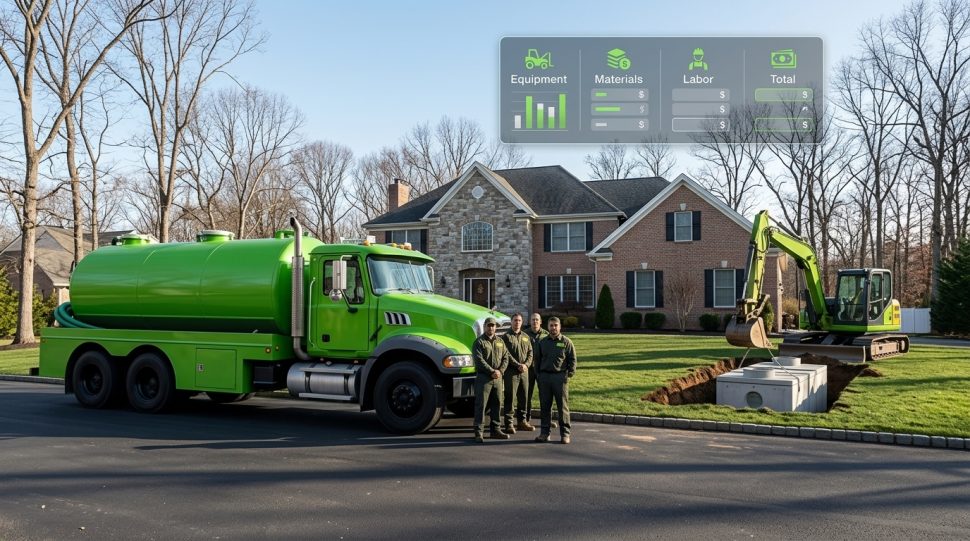
The tank itself typically runs $1,000-$3,200, depending on material and size. However, that’s just the beginning. Labor costs for excavation, installation, and backfilling add another $2,500-$5,000 to your total.

Furthermore, you’ll need permits from your local health department. Suffolk and Nassau Counties require inspections and approvals, which cost $300-$800. Don’t skip this step—unpermitted work can cause major headaches when you sell your home.

Hidden Costs You Should Know About

Here’s what catches many homeowners off guard. Old tank removal and disposal adds $500-$1,500 to your project. Similarly, if your drain field needs work, that’s another $3,000-$10,000 on top of tank replacement.

Landscaping restoration is another factor. Excavation tears up your yard, and fixing it properly costs $500-$2,000. Additionally, if your property has difficult access, you might need special equipment that increases labor costs.

When Repair Makes More Sense Than Replacement

Not every problem requires a full replacement. Sometimes, Septic Tank Services like repairs or maintenance solve your issues at a fraction of the cost.

Minor cracks in concrete tanks can often be sealed for $500-$1,500. Likewise, replacing damaged baffles costs $300-$900. These fixes extend your system’s life without breaking the bank.

However, certain situations demand replacement. If your tank is over 30 years old and showing multiple problems, replacement makes more financial sense. Moreover, severely cracked or collapsed tanks pose health risks that repairs can’t address.

Signs You Need Replacement, Not Just Repair

Watch for these red flags that indicate it’s time for a new tank:

  • Sewage backing up into your home regularly
  • Persistent foul odors around your yard
  • Soggy patches or standing water over the drain field
  • Multiple structural cracks or visible tank deterioration
  • Contaminated well water (if you have one)

Consequently, ignoring these signs leads to more expensive problems down the road. Environmental contamination can result in hefty fines from local authorities.

Long Island-Specific Considerations for Your Project

Living on Long Island means dealing with unique challenges. Our proximity to water bodies and high water tables affects installation methods and costs.

Many Long Island properties have high groundwater levels, especially in coastal areas. Therefore, you might need a specially designed system with risers and additional waterproofing. This adds $1,000-$3,000 to standard installation costs.

Suffolk County has particularly strict regulations due to environmental concerns. According to the Suffolk County Department of Health Services, all new systems must meet current nitrogen-reduction standards. Consequently, you might need advanced treatment systems that cost more upfront.

Cesspool vs. Septic Tank Replacement

Many older Long Island homes still have cesspools rather than septic systems. If you’re converting from a cesspool, expect higher costs because you’re essentially building a complete system from scratch.

A full cesspool installation Long Island conversion to a modern septic system runs $10,000-$25,000. Nevertheless, it’s often worth it. Modern septic systems are more environmentally friendly and less likely to fail.

Plus, some municipalities now require cesspool replacement when homes change ownership. Check your local regulations before buying or selling property.

How to Get the Best Value for Your Investment

Smart shopping can save you thousands without sacrificing quality. Start by getting at least three detailed quotes from licensed contractors.

Each quote should break down costs for materials, labor, permits, and disposal. Beware of quotes that seem too good to be true—they usually are. Lowball estimates often lead to surprise charges or subpar work.

Additionally, ask about warranties. Reputable contractors offer guarantees on both materials and workmanship. A solid warranty protects your investment for years to come.

Questions to Ask Before Hiring

Don’t just hire the first contractor you find. Ask these important questions:

  • Are you licensed and insured in New York?
  • How many similar projects have you completed on Long Island?
  • Will you handle all permits and inspections?
  • What’s your typical timeline for completion?
  • Do you offer financing options?

Furthermore, check references and online reviews. A contractor’s track record tells you everything about their reliability and quality.

Financing Your Septic Tank Replacement

Let’s be honest—this is a big expense. Fortunately, you’ve got options beyond paying cash upfront.

Many contractors offer payment plans or financing through third-party lenders. Interest rates vary, but spreading payments over 12-60 months makes the project more manageable. Moreover, some homeowners use home equity loans or lines of credit for lower interest rates.

Check if your town offers any assistance programs. Some Long Island municipalities provide grants or low-interest loans for septic system upgrades, especially for income-qualified homeowners.

Long-Term Savings Through Proper Maintenance

Here’s the good news: proper maintenance extends your new system’s life and prevents costly repairs. Regular pumping every 3-5 years costs $300-$600 but saves you thousands in potential damage.

Similarly, being mindful of what goes down your drains protects your investment. Avoid flushing non-biodegradable items, excessive chemicals, or grease. These simple habits keep your system running smoothly for decades.

Why Choose Professional Installation

We get it—DIY projects save money. However, septic tank replacement isn’t the time to cut corners. Professional installation ensures your system meets all codes and functions properly.

Licensed contractors understand Long Island’s specific soil conditions and regulations. They’ve got the right equipment and experience to handle unexpected challenges. Plus, professional work comes with warranties that protect you if something goes wrong.

Our team at Rapid Response Cesspool has installed hundreds of systems across Long Island. We know the ins and outs of local requirements and can navigate the permit process smoothly. Additionally, we offer comprehensive Sewer & Drain Services to address any related issues.

Take the Next Step Toward a New Septic System

Understanding septic tank replacement cost helps you budget and plan effectively. While it’s a significant investment, a new system provides peace of mind and protects your property value.

Don’t wait until an emergency forces your hand. Proactive replacement on your timeline saves money and stress compared to emergency installations. Moreover, modern systems offer better performance and environmental protection than older tanks.

Ready to get a detailed estimate for your property? Call us at (631) 383-4797 or visit our Contact Us page. We’ll assess your specific situation and provide a transparent quote with no hidden fees. Our team is here to answer your questions and guide you through every step of the process.

Check out our complete range of IO Systems for advanced treatment options. Let’s work together to find the right solution for your Long Island home at https://rapidresponsecesspool.com.

Discover septic tank replacement cost factors for Long Island homes. Get expert insights on pricing, materials, and installation from local professionals.
The Complete Guide to Cesspool Installation on Long Island

The Complete Guide to Cesspool Installation on Long Island

Understanding Cesspool Installation Long Island: What Every Homeowner Needs to Know

If you’re looking into cesspool installation Long Island, you’re probably building a new home or replacing an old system that’s seen better days. Here’s the thing—choosing the right wastewater system isn’t just about digging a hole and calling it done. It’s about protecting your property, your family’s health, and honestly, your wallet too.

We’ve been installing cesspools across Long Island for years, and we know exactly what works in our sandy soil and what doesn’t. This guide walks you through everything from permits to pricing, so you can make smart decisions about your property.

What Exactly Is a Cesspool and How Does It Work?

Let’s start with the basics. A cesspool is an underground chamber that collects wastewater from your home. Unlike septic systems with multiple tanks and drain fields, cesspools are simpler structures—basically a large concrete or precast tank with perforated walls.

Here’s how it works: wastewater flows from your home into the cesspool. Solid waste settles at the bottom, while liquids seep through the perforations into the surrounding soil. Pretty straightforward, right?

However, there’s a catch. Because cesspools don’t treat wastewater as thoroughly as modern systems, they’re being phased out in many areas. That said, they’re still legal for replacements in certain Long Island locations, and they’re definitely more budget-friendly than full septic systems.

The Key Components of a Cesspool System

Every cesspool installation includes several critical parts:

  • The tank itself – Usually precast concrete with holes for drainage
  • Inlet pipe – Carries wastewater from your house to the cesspool
  • Riser and cover – Provides access for pumping and maintenance
  • Distribution box – Sometimes used when multiple cesspools are needed

Additionally, you’ll need proper backfill material and sometimes a layer of gravel around the tank. These materials help with drainage and prevent the tank from shifting over time.

Cesspool Installation Long Island: The Step-by-Step Process

So what actually happens when you schedule a cesspool installation Long Island? Let’s break it down so you know what to expect.

First, we handle all the paperwork. That means pulling permits from your local health department and getting soil tests done. Meanwhile, you can’t skip this step—Long Island regulations are strict, and for good reason.

Site Evaluation and Preparation

Before we dig, we evaluate your property carefully. We’re looking at soil composition, water table depth, and distance from wells or property lines. Furthermore, we mark out utility lines so we don’t accidentally hit anything important.

Once we’ve got the green light, excavation begins. We dig a hole big enough for your cesspool tank plus some working room. For most homes, that’s about 10-12 feet deep and 8-10 feet wide.

Tank Installation and Connection

Next, we lower the precast concrete tank into place using heavy equipment. This part requires precision—if the tank isn’t level, you’ll have drainage problems down the road.

After that, we connect the inlet pipe from your house to the cesspool. We make sure everything’s sealed tight and sloped correctly so wastewater flows smoothly. Then we install the riser and cover at ground level for easy access later.

Finally, we backfill around the tank, compact the soil, and restore your yard as much as possible. Most installations take 1-2 days from start to finish, weather permitting.

Cesspool vs Septic Tank: Which System Makes Sense for You?

Here’s a question we hear constantly: what’s the real difference between cesspool vs septic tank systems? Both handle wastewater, but they work quite differently.

Cesspools are simpler and cheaper upfront. They’re single-chamber systems where everything happens in one tank. Septic tanks, on the other hand, are more complex with separate chambers for settling and treatment, plus a drain field for final filtration.

Cost Comparison

Let’s talk money. A basic cesspool installation typically runs $3,000-$6,000 depending on size and site conditions. In contrast, a full septic system with drain field costs $8,000-$15,000 or more.

Nevertheless, there’s a tradeoff. Cesspools need pumping more frequently (every 1-3 years) compared to septic tanks (every 3-5 years). Over time, those pumping costs add up.

Environmental and Regulatory Considerations

Here’s where things get interesting. New York State has been pushing for better wastewater treatment systems Long Island to protect groundwater. Consequently, new construction usually requires septic systems or advanced treatment systems rather than cesspools.

However, if you’re replacing an existing cesspool, you can often install another cesspool in the same location. Check with your local health department first—rules vary by town and lot size.

For modern alternatives, our IO Systems provide advanced treatment that meets current environmental standards while protecting Long Island’s precious groundwater resources.

Long Island Soil and Water Table Challenges

Long Island’s unique geography creates specific challenges for cesspool installation. Our sandy soil drains quickly, which sounds great until you realize it also means less natural filtration of wastewater.

Moreover, the water table here sits pretty high—sometimes just a few feet below the surface. That’s why proper depth and sizing are absolutely critical. If your cesspool sits too close to the water table, you’re asking for contamination problems.

Meeting Local Code Requirements

Every town on Long Island has slightly different rules. Generally speaking, though, cesspools must be:

  • At least 50 feet from any well
  • 20 feet from property lines
  • 10 feet from buildings
  • Sized appropriately for your home’s bedroom count

Additionally, you’ll need approval from the Suffolk or Nassau County Health Department. They’ll review your plans and conduct inspections during installation. It’s bureaucratic, sure, but it protects everyone’s water supply.

How to Choose the Right Size Cesspool for Your Home

Size matters when it comes to cesspools. Too small, and you’ll be pumping constantly. Too large, and you’ve wasted money on unnecessary capacity.

The standard calculation is based on bedrooms, not bathrooms. A typical three-bedroom home needs a 1,000-1,500 gallon cesspool. Four bedrooms? You’re looking at 1,500-2,000 gallons minimum.

However, other factors come into play too. Do you have teenagers who take long showers? Large family gatherings regularly? A home business? These scenarios mean more wastewater, so we might recommend going bigger.

Maintenance Tips to Extend Your Cesspool’s Life

Once your cesspool’s installed, proper maintenance keeps it working for decades. Fortunately, it’s not complicated—just consistent.

First and foremost, pump regularly. Don’t wait until you smell something or see soggy spots in your yard. By then, you’ve got a problem that’s expensive to fix. Instead, stick to a schedule based on your household size and usage.

What Not to Flush

Your cesspool isn’t a garbage disposal. Avoid putting these down your drains:

  • Grease, oils, and fats
  • Coffee grounds and food scraps
  • “Flushable” wipes (they’re not really flushable)
  • Feminine hygiene products
  • Chemicals and paint
  • Medications

Similarly, limit your use of harsh chemical cleaners. They kill the beneficial bacteria that help break down waste in your cesspool. Stick with mild, septic-safe products instead.

For comprehensive maintenance and emergency services, check out our Sewer & Drain Services to keep your entire wastewater system running smoothly.

Signs You Need Cesspool Replacement

Even well-maintained cesspools don’t last forever. Long Island’s aggressive soil conditions and high water table take their toll. Here’s what to watch for:

Slow drains throughout your house suggest your cesspool’s reaching capacity or the soil around it isn’t draining properly anymore. Likewise, sewage odors in your yard or basement mean wastewater isn’t being contained.

Wet, soggy areas above your cesspool—especially when it hasn’t rained—indicate failure. At that point, you need professional assessment quickly. According to the EPA’s septic system guidelines, failed systems pose serious health risks and require immediate attention.

Why Choose Professional Installation Over DIY

Look, we get it. DIY saves money. But cesspool installation isn’t like building a deck or painting a room. There’s heavy equipment, health department inspections, and serious consequences if something goes wrong.

Professional installers bring expertise that prevents costly mistakes. We know Long Island’s soil conditions, understand local codes inside and out, and have the proper insurance and licensing. Furthermore, we handle all the permit paperwork and coordinate inspections.

Think about it this way: a properly installed cesspool lasts 20-40 years. A poorly installed one might fail in 5-10 years, costing you thousands more in premature replacement. That’s not a gamble worth taking.

Comparing Modern Wastewater Treatment Systems Long Island

While traditional cesspools work, newer wastewater treatment systems Long Island offer significant advantages. These advanced systems treat wastewater more thoroughly before releasing it into the soil.

Aerobic treatment units, for instance, add oxygen to speed up bacterial breakdown of waste. They produce cleaner effluent than cesspools or standard septic tanks. Similarly, our Septic Tank Services include options for upgraded treatment systems.

These systems cost more initially, but they’re better for the environment and often required for properties near sensitive areas like wetlands or coastal zones. Plus, they can increase your property value.

Financing and Cost Considerations

Let’s address the elephant in the room: cost. Cesspool installation represents a significant investment, typically $3,000-$6,000 for basic systems.

However, several factors affect your final price:

  • Tank size and material
  • Site accessibility and soil conditions
  • Distance from house to installation location
  • Permit fees and inspection costs
  • Landscaping restoration

Moreover, some homeowners qualify for financing or payment plans. We work with you to find solutions that fit your budget without cutting corners on quality.

Ready to Move Forward with Your Cesspool Installation?

Installing or replacing a cesspool is a big decision, but you don’t have to navigate it alone. We’ve helped hundreds of Long Island homeowners find the right wastewater solution for their properties.

Our team handles everything from initial site evaluation through final inspection. We pull permits, coordinate with health departments, and complete installations efficiently with minimal disruption to your daily life.

Whether you need a straightforward cesspool replacement or want to explore modern treatment options, we’re here to help. Give us a call at (631) 383-4797 or visit Contact Us to schedule your free consultation.

Don’t wait until you’ve got sewage backing up into your home. Let’s discuss your options and get your wastewater system working properly. After all, that’s what we do best—and we’ve been doing it for Long Island families for years.

Check out our website at https://rapidresponsecesspool.com for more information about our services and to read reviews from satisfied customers throughout Nassau and Suffolk Counties.

Expert guide to cesspool installation Long Island. Learn costs, permits, cesspool vs septic differences, and maintenance tips from local pros.

5 Signs Your Cesspool Needs Immediate Pumping in Nassau County

5 Signs Your Cesspool Needs Immediate Pumping in Nassau County

Why Cesspool Pumping Nassau County Homeowners Can’t Ignore

If you’re a homeowner in Nassau County, your cesspool works hard every single day. But here’s the thing—most folks don’t think about their cesspool until something goes wrong. And when it does? It’s usually messy, expensive, and stressful.

That’s why knowing the warning signs matters so much. When you catch problems early, you’ll save money and avoid nasty surprises. Plus, regular cesspool pumping Nassau County residents schedule keeps your system running smoothly for years.

So let’s talk about the five red flags that mean you need to call for help right now. Trust us—we’ve seen what happens when homeowners wait too long.

Sign #1: Slow Drains Throughout Your Home

Notice your sinks draining slower than usual? Maybe your shower’s backing up a bit? Here’s what’s happening: your cesspool’s probably getting full.

When your cesspool reaches capacity, water has nowhere to go. So it backs up through your plumbing system. One slow drain might be a clog. But multiple slow drains? That’s your cesspool crying for help.

Don’t ignore this warning sign. It only gets worse from here. And honestly, it’s one of the easiest problems to fix when you catch it early.

What You’ll Notice First

  • Kitchen sink takes forever to empty
  • Bathtub water pools around your feet during showers
  • Toilet water rises higher than normal before draining
  • Gurgling sounds coming from your drains

Additionally, you might hear strange noises from your pipes. These gurgling sounds happen because air can’t escape properly when your cesspool’s full. It’s like trying to pour water from a full bottle—everything backs up.

Sign #2: Foul Odors Around Your Property

Let’s be real—nobody wants to smell sewage in their yard. But that’s exactly what happens when your cesspool needs attention.

These smells can show up anywhere. Sometimes it’s near your cesspool cover. Other times, you’ll catch a whiff near your foundation or in your basement. Either way, it’s not normal.

The odor comes from gases building up in your overloaded system. Meanwhile, liquid waste might be seeping into areas where it shouldn’t be. That’s not just unpleasant—it’s actually a health hazard.

Where You Might Smell Problems

  • Around the cesspool access point in your yard
  • Near drains inside your home
  • In your basement or crawl space
  • Around your property’s low-lying areas

Furthermore, these smells often get worse after heavy rain. That’s because saturated soil can’t absorb any more liquid from your cesspool. According to the EPA’s septic system guidelines, persistent odors mean immediate action’s needed.

Sign #3: Standing Water or Soggy Spots in Your Yard

Here’s a big red flag: wet, soggy patches in your yard when it hasn’t rained. Or maybe you’re seeing standing water near your cesspool location.

This happens when your cesspool overflows. The liquid waste has nowhere else to go, so it rises to the surface. Not only does this look bad, but it’s also dangerous for your family and pets.

These soggy areas might also have unusually green grass. Sounds nice, right? Wrong. That lush grass grows because it’s being “fertilized” by sewage. Yuck.

On top of that, standing water attracts mosquitoes and other pests. It can also contaminate your groundwater, which affects your neighbors too. That’s why our Septic Tank Services team responds quickly to these situations.

Sign #4: Toilets and Fixtures Backing Up

Nothing’s worse than a toilet that won’t flush properly. Or worse—one that backs up completely. This is your cesspool screaming for help.

When waste backs up into your home, you’re dealing with a serious problem. It means your cesspool’s so full that it can’t accept any more waste. Everything’s coming back the way it went in.

This isn’t just inconvenient. It’s unsanitary and potentially dangerous. Raw sewage contains bacteria and pathogens that can make your family sick.

Common Backup Scenarios

  • Toilet water rises when you flush other fixtures
  • Shower water backs up into your tub
  • Multiple toilets won’t flush properly
  • Sewage appears in your basement floor drains

Moreover, backups often happen at the worst possible times—like when you have guests or during holidays. That’s because you’re using more water than usual. If you’re searching for “cesspool cleaning near me,” don’t wait another minute to call us.

Sign #5: It’s Been More Than Three Years Since Your Last Pumping

Here’s the simplest sign of all: when was your last pumping? If you can’t remember, or if it’s been more than three years, you’re overdue.

Most Nassau County homes need cesspool pumping Nassau County professionals every 2-3 years. But that depends on your household size and water usage. Bigger families need more frequent service.

Think of it like changing your car’s oil. You don’t wait until your engine seizes up, right? Same principle applies here. Regular maintenance prevents emergencies.

In fact, skipping regular pumping costs you more in the long run. You’ll face repairs, property damage, and even potential health code violations. None of that’s cheap.

Why Nassau County Cesspools Need Special Attention

Living on Long Island comes with unique challenges for cesspool owners. Our soil conditions, high water table, and population density all affect how cesspools function.

Nassau County’s clay-heavy soil doesn’t drain as quickly as sandy soil. Consequently, your cesspool works harder to process waste. Add in our wet springs and occasional flooding, and you’ve got a system under constant stress.

That’s why local expertise matters. We understand Nassau County’s specific conditions. We’ve worked on thousands of cesspools throughout the area. And we know exactly what your system needs to stay healthy.

Similarly, if you have property in neighboring areas, our septic tank pumping Suffolk County services cover you there too. We serve the entire Long Island community with the same dedication and expertise.

What Happens If You Ignore These Signs?

Let’s talk about the consequences of waiting too long. First, you’ll deal with more expensive repairs. A simple pumping costs way less than fixing a collapsed cesspool.

Second, you risk contaminating your property’s groundwater. This affects your well water if you have one. It can also spread to neighboring properties, creating legal headaches.

Third, you might face fines from local health departments. Nassau County takes cesspool maintenance seriously. They can issue violations if your system becomes a health hazard.

Potential Costs of Neglect

  • Emergency pumping services (often double the regular cost)
  • Cesspool repairs or replacement ($5,000-$15,000+)
  • Property damage from sewage backups
  • Health department fines and violations
  • Decreased property value

Beyond that, you’ll deal with stress and disruption to your daily life. Nobody wants contractors in their yard for weeks fixing a problem that could’ve been prevented. Our Sewer & Drain Services team has seen it all, and prevention always beats emergency repairs.

How We Make Cesspool Pumping Easy for You

We’ve been serving Nassau County families for years. And we’ve learned what matters most to homeowners: quick response, fair pricing, and respectful service.

When you call us, we’ll schedule a convenient time that works for your busy life. Our trucks arrive on time, and we complete most pumping jobs in under two hours. We’ll also inspect your system and let you know if we spot any concerns.

Plus, we keep detailed records of your service. That means we’ll remind you when it’s time for your next pumping. No more guessing or forgetting—we’ve got you covered.

In addition, we offer flexible scheduling including evenings and weekends. Because we know emergencies don’t wait for business hours. Check our IO Systems page to learn about modern alternatives if you’re considering an upgrade.

Take Action Before Small Problems Become Big Emergencies

You’ve learned the five warning signs. Now here’s the important part: don’t wait until you’re dealing with a full-blown emergency.

Regular cesspool pumping Nassau County homeowners schedule saves money, protects your property, and gives you peace of mind. It’s one of those things that’s easy to put off—until it’s suddenly urgent.

We’re here to help you avoid that stress. Our team responds quickly, works efficiently, and treats your property with respect. We’ve built our reputation on reliable service and honest pricing.

So if you’ve noticed any of these warning signs—or if it’s just been too long since your last pumping—give us a call today at (631) 383-4797. Or visit our Contact Us page to schedule service online.

Your cesspool’s health affects your home’s comfort and your family’s safety. Let’s keep everything running smoothly together. We’re your neighbors, and we’re here to help.

Spot the 5 warning signs your cesspool needs pumping now. Nassau County experts explain what to watch for and why quick action saves money.