If you own a home in Smithtown, NY, chances are your property relies on a cesspool system for wastewater management. Whether you’re a long-time resident or new to the area, understanding how your cesspool works and when it needs service is critical to avoiding costly backups and environmental problems.
Rapid Response Cesspool, Sewer & Drain Inc. has been serving Nassau and Suffolk County homeowners for years, and we know the unique challenges that Long Island properties face. This guide covers everything Smithtown homeowners need to know about cesspool maintenance, pumping, repairs, and when to call a professional.
Why Cesspool Service Matters in Smithtown
Smithtown, like much of Long Island, relies heavily on individual septic and cesspool systems rather than municipal sewer lines. These systems are the backbone of your home’s wastewater management—they collect, treat, and dispose of everything that goes down your drains.
Unlike municipal sewer systems, your cesspool is your responsibility. That means regular maintenance isn’t optional; it’s essential for protecting your property value, your family’s health, and the local groundwater.
Over time, solids accumulate in your cesspool tank. Without regular pumping, this buildup can lead to system failure, expensive repairs, and potential environmental contamination. In Smithtown and across Long Island, neglected cesspools are one of the top reasons homeowners face sudden, expensive emergencies.
How Often Should Your Cesspool Be Pumped?
Most Smithtown homeowners should have their cesspools pumped every 3 to 5 years. However, the exact interval depends on several factors unique to your household.
Factors that determine pumping frequency:
- Size of your household (more people = faster filling)
- Tank capacity (measured in gallons)
- Water usage (frequent showers, laundry, dishwashing)
- What goes down your drains (grease, chemicals, paper products)
A family of four with a 1,000-gallon tank may need pumping every 3 years, while a smaller household might stretch it to 5 years. The only way to know for sure is to have a professional inspect your tank’s actual sludge level.
Regular pumping prevents backups, extends your system’s lifespan, and keeps your Smithtown neighborhood’s groundwater clean.
Signs Your Cesspool Needs Immediate Service
Don’t wait for your scheduled service if you notice any of these warning signs:
- Slow drains in bathrooms, kitchen, or laundry room
- Sewage backups into your home
- Foul odors near the tank or drain field area
- Soggy patches or unusually green grass over your drain field
- Gurgling sounds from pipes when using water
- Pooling water in the yard after rain or system use
These signs indicate that your cesspool is full, failing, or both. Ignoring them can lead to system failure, contamination of your yard and neighbors’ wells, and expensive repairs or replacement.
What Happens During Professional Cesspool Pumping
When you schedule a service with a licensed company like Rapid Response Cesspool, Sewer & Drain Inc., here’s what to expect:
Inspection and assessment: The technician locates your tank, measures the sludge and scum levels, and evaluates the overall condition of the system.
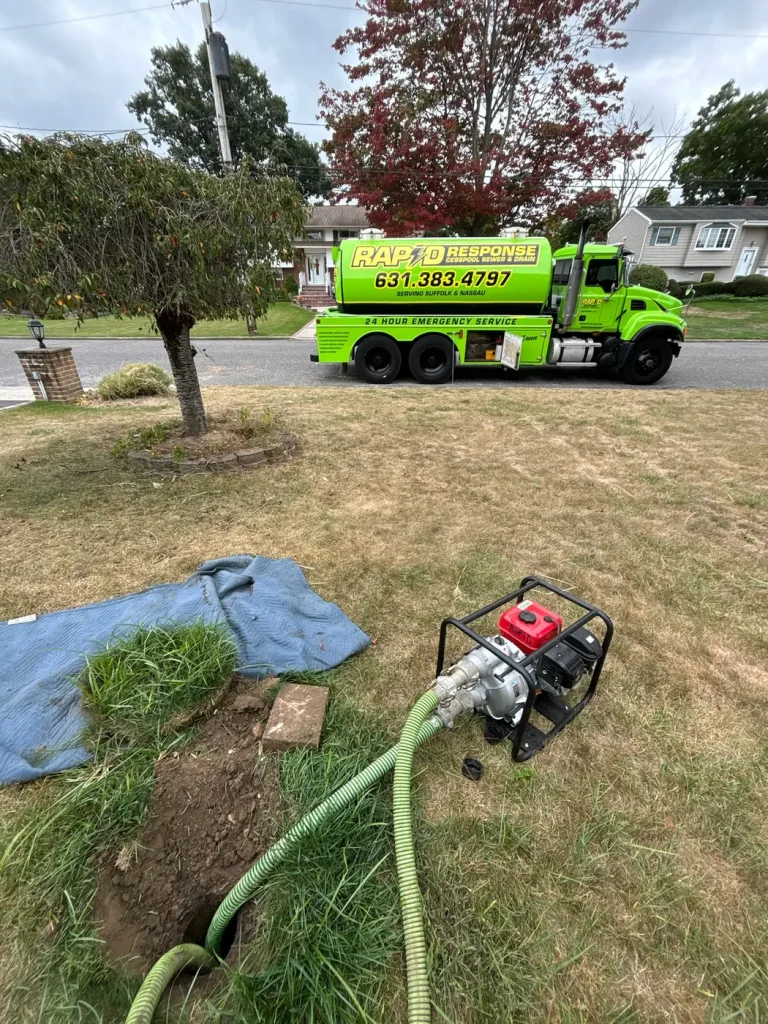
Pumping: Special equipment removes accumulated solids and liquid waste from the tank. This typically takes 30 minutes to 2 hours, depending on tank size and condition.
Tank cleaning: A thorough cleaning removes buildup on tank walls that can reduce the tank’s efficiency.
Detailed report: You’ll receive documentation of what was pumped, the tank’s condition, and recommendations for future maintenance.
This professional approach protects your investment and gives you peace of mind that your Smithtown home’s wastewater system is functioning properly.
Common Cesspool Problems Beyond Pumping
Regular pumping prevents many issues, but Smithtown homeowners can also face other problems that require professional repair:
Drain field failures: The drain field—the area where treated water disperses into the soil—can fail if it becomes saturated or clogged. This is common in Long Island’s sandy soil, especially after heavy rain or if the cesspool overflows repeatedly.
Tank cracks or structural damage: Older tanks or those exposed to excessive weight can crack, allowing untreated wastewater to leak into the surrounding soil and groundwater.
Root intrusion: Trees and shrubs near your tank can send roots into cracks, blocking pipes and damaging the system.
Bacterial or chemical imbalances: Flushing medications, harsh chemicals, or excessive bleach can kill the beneficial bacteria that break down waste, causing backups.
If you suspect any of these problems in your Smithtown home, professional diagnosis is crucial before they worsen.
Cesspool Maintenance Tips for Long Island Homeowners
Between professional services, you can take steps to protect your system:
- Watch what you flush: Never flush paper towels, feminine hygiene products, wipes, or dental floss. Limit toilet paper use to a reasonable amount.
- Avoid pouring grease down drains: Grease solidifies in pipes and tanks, causing backups. Pour it into a container and throw it away.
- Use septic-safe products: Choose toilet paper, detergents, and cleaners labeled septic-safe. Harsh chemicals kill the bacteria your system needs.
- Don’t overload the system: Spread out laundry and long showers to avoid overwhelming the tank.
- Protect the drain field: Don’t plant trees or shrubs directly over it, and avoid parking vehicles on the area.
- Keep records: Document each pumping and any repairs. This history is valuable for future sales or maintenance planning.
These simple habits extend your cesspool’s lifespan and reduce the likelihood of emergency repairs.
Choosing a Cesspool Service Provider in Smithtown
When you need professional help, look for a licensed, insured company with experience serving Nassau and Suffolk County homes. The company should:
- Hold proper New York State licensing
- Carry liability and workers’ compensation insurance
- Provide honest assessments without pressure to sell unnecessary services
- Offer transparent communication and detailed documentation
- Serve the greater Long Island area, including Smithtown and surrounding towns
A reputable company will answer your questions, explain findings clearly, and help you understand your system’s condition and needs.
Cesspool vs. Septic: Know the Difference
Smithtown has both cesspool and septic systems. While similar, they work differently:
Cesspools are simple holding tanks that collect all wastewater. They require regular pumping because they don’t treat waste—they just store it. Most older Long Island homes have cesspools.
Septic systems have a tank plus a drain field. Inside the tank, bacteria break down solids. Treated liquid drains into the soil through the drain field. Septic systems are more efficient and require less frequent pumping.
If you’re unsure which system you have, a professional inspection can identify it. This matters because maintenance and repair approaches differ.
Environmental Responsibility and Local Regulations
New York State and Nassau/Suffolk County have regulations governing cesspool use and maintenance. Regular servicing isn’t just maintenance—it’s a legal requirement to protect groundwater and prevent contamination in your Smithtown neighborhood and across Long Island.
Failing to maintain your system can result in violations, fines, or mandates to upgrade or replace the system. Professional, documented maintenance keeps you compliant and protects your community’s water supply.
FAQs About Cesspool Service in Smithtown
How do I know where my cesspool tank is located?
Your property deed or original construction documents may show the location. If not, a professional can locate it using equipment that detects the tank or by probing the yard. Mark the location once found to make future service easier.
Can I pump my cesspool myself?
No. Pumping requires specialized trucks, equipment, and proper disposal of waste at licensed facilities. DIY attempts risk spills, contamination, and personal safety hazards. Always hire a licensed professional.
What should I do if sewage backs up into my home?
Stop using water and contact a professional immediately. Backups indicate a full or failing system and require urgent attention. Do not attempt to fix this yourself—raw sewage poses serious health risks.
How much does cesspool service cost?
Costs vary based on tank size, condition, accessibility, and the specific service needed. Contact a licensed provider in Smithtown for an estimate tailored to your property.
Is it better to repair or replace a failing cesspool?
This depends on the tank’s age, damage severity, and soil conditions. A professional inspection determines whether repair is viable or replacement is necessary. Older tanks approaching 30 years often justify replacement.
Do I need permits for cesspool work in Smithtown?
Yes, most major cesspool work requires permits from the Town of Smithtown or Suffolk County Health Department. A licensed service provider handles permit requirements as part of their job.
For expert guidance on your Smithtown cesspool system, request a free estimate online or contact a licensed professional today. Regular maintenance protects your home, property value, and Long Island’s water quality.