Why Commercial Cesspool Service Matters for Long Island Businesses
If you operate a business on Long Island—whether it’s a restaurant, office building, retail shop, or industrial facility—your cesspool and drainage system works behind the scenes to keep operations running smoothly. Unlike residential properties, commercial facilities handle significantly higher volumes of wastewater daily, which means your system needs specialized attention and regular maintenance from professionals who understand commercial demands.
Rapid Response Cesspool, Sewer & Drain Inc. has spent years serving Nassau County and Suffolk County businesses, helping them avoid costly shutdowns, health code violations, and environmental damage. This guide explains what commercial cesspool service involves and why it’s essential for your Long Island business.
Understanding Commercial Cesspool Systems
Commercial cesspool systems differ from residential ones in several important ways. They’re typically larger, handle more complex waste streams, and must comply with stricter regulations. A restaurant’s grease-laden wastewater requires different treatment than an office building’s restroom waste. Industrial facilities may generate specialized effluent that demands custom solutions.
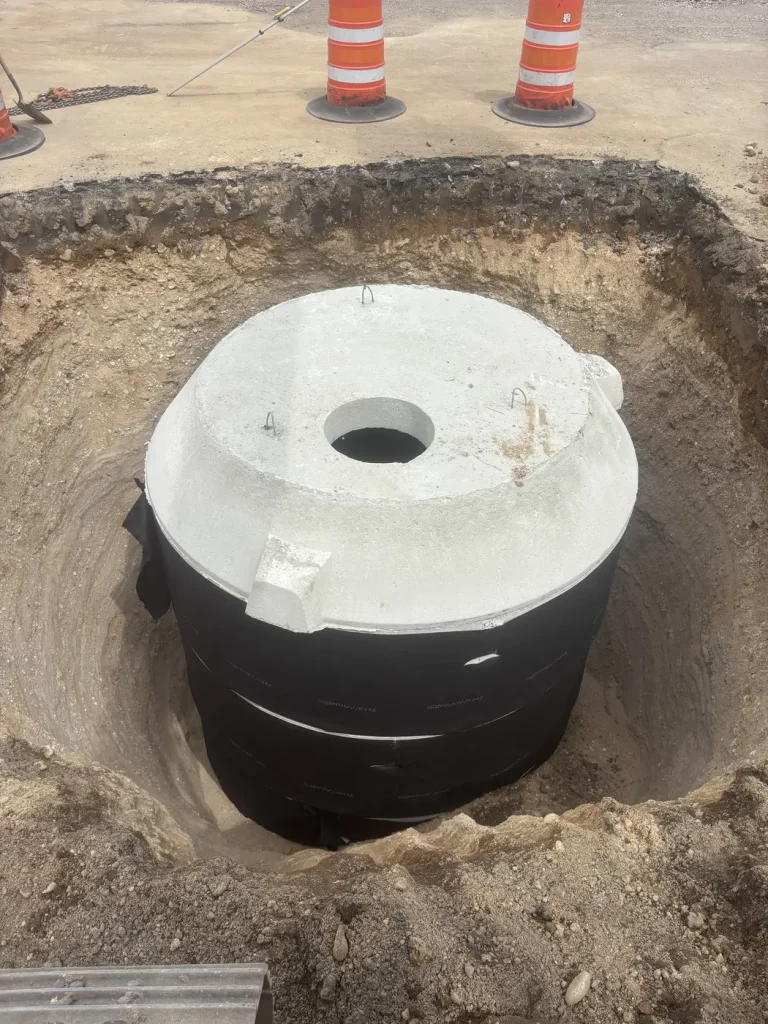
Your system consists of multiple components: the main septic tank or cesspool, distribution lines, drain fields, and potentially specialized treatment units. Each part plays a critical role, and when one fails, your entire business can be affected. Regular inspections and maintenance catch problems before they become emergencies.
Common Commercial Drainage Issues on Long Island
Long Island’s geography—with its sandy soil and high water table—creates unique challenges for commercial drainage systems. Properties in towns like Hempstead, Huntington, and Port Jefferson often struggle with seasonal water level fluctuations that stress aging systems.
Common problems include:
- Grease accumulation in lines (especially for food service businesses)
- Root intrusion from mature trees common in Long Island’s commercial districts
- Soil compaction from heavy equipment and foot traffic
- High water table during spring and winter months
- System failure due to inadequate capacity for growing businesses
- Sediment buildup in drain fields
When these issues go unaddressed, they can lead to raw sewage backups, foul odors, environmental contamination, and regulatory violations that threaten your business license.
Regular Maintenance Prevents Emergency Repairs
The most cost-effective approach to commercial cesspool management is preventive maintenance. A structured maintenance schedule keeps your system operating at peak efficiency and extends its lifespan significantly.
Professional maintenance includes regular pumping (frequency depends on usage volume), inspections using camera technology to identify early problems, grease trap cleaning for food service operations, and drain line flushing to prevent blockages. For commercial facilities in Nassau and Suffolk Counties, we recommend scheduling inspections at least annually, with pumping frequency determined by your specific waste volume and system size.
Many businesses discover that proper maintenance actually saves them money by avoiding emergency service calls, temporary closures, and major repairs or replacements.
Grease Management for Food Service Businesses
If you operate a restaurant, cafeteria, or food preparation facility, grease management is critical. Cooking oils and fats don’t break down like other waste—they solidify as they cool, coating pipes and eventually blocking your entire system.
Commercial grease traps require professional cleaning on a regular basis. The frequency depends on your operation’s size and cooking volume. Many food service businesses benefit from monthly or quarterly grease trap service, combined with staff training on proper disposal practices. Keeping fats, oils, and greases out of your drainage system protects both your business and the environment.
Compliance and Environmental Responsibility
Commercial properties in Nassau County and Suffolk County must meet Department of Environmental Conservation (DEC) regulations regarding wastewater treatment and disposal. Non-compliance can result in fines, forced closures, or legal liability if your system contaminates groundwater or neighboring properties.
Professional cesspool service providers stay current with local regulations and ensure your system meets all requirements. We help you maintain proper documentation, schedule required inspections, and implement upgrades if your current system no longer meets modern standards.
Beyond legal requirements, responsible businesses recognize that protecting Long Island’s groundwater and environment is good business practice and part of community stewardship.
When You Need Emergency Service
Sometimes problems develop despite good maintenance. A sudden backup, raw sewage surfacing in your parking lot, or a complete system failure requires immediate professional response. Rapid Response Cesspool, Sewer & Drain Inc. provides emergency service for commercial facilities across Long Island because we understand that downtime costs money.
If your business experiences drainage emergencies, prompt professional diagnosis and repair minimizes disruption. Our technicians arrive equipped with diagnostic equipment and repair capabilities to address most issues quickly, getting your business operational again.
Choosing a Commercial Cesspool Service Provider
Not all service providers have experience with commercial systems. Choose a company that:
- Holds proper licensing and insurance for commercial work
- Understands local Long Island regulations for Nassau and Suffolk Counties
- Has experience with your type of business (food service, industrial, office, retail, etc.)
- Offers comprehensive services beyond just pumping
- Provides reliable scheduling and emergency response
- Uses modern diagnostic equipment like video inspection cameras
- Communicates clearly about findings and recommendations
A reputable local provider who knows Long Island’s soil conditions, water table patterns, and regulatory environment brings valuable expertise to your business’s wastewater management.
Planning System Upgrades or Replacements
If your business is expanding or your current cesspool system is aging, professional assessment helps determine whether repairs, replacements, or upgrades make sense. Newer systems may offer better capacity, efficiency, and environmental protection than older installations.
Professional service providers can evaluate your current system, project future needs based on your business growth, and recommend solutions that balance effectiveness with your operational requirements.
Frequently Asked Questions
How often should a commercial cesspool be pumped?
Pumping frequency depends on your system’s size, the volume of waste you generate, and local regulations. Most commercial facilities require pumping more frequently than residential properties. A professional assessment determines the right schedule for your specific business.
What happens if a commercial cesspool backs up during business hours?
This is an emergency requiring immediate professional response. Raw sewage backups create health hazards, violate regulations, and can force temporary closure. Emergency service should include diagnosis of the cause and repair or temporary solutions to restore function. Request a free estimate online to discuss emergency response availability for your location.
Are there regulations I need to follow for my commercial system in Nassau or Suffolk County?
Yes. Both counties require commercial properties to maintain compliant wastewater treatment and disposal systems. Requirements vary based on your facility type and size. A licensed professional can review your specific obligations and ensure your system meets current standards.
Can video inspection identify problems before they cause backups?
Absolutely. Modern video inspection cameras allow technicians to see inside pipes and identify root intrusion, grease buildup, cracks, and other issues before they cause system failure. Regular inspections catch developing problems when they’re easier and less expensive to address.
What should food service businesses do besides regular pumping?
Grease trap cleaning is essential—typically monthly or quarterly depending on cooking volume. Staff training on proper disposal (never pouring cooking oil down drains) is equally important. Combined preventive practices protect your system and minimize environmental impact.
How do I know if my commercial system needs replacement rather than repair?
A professional inspection determines whether your system can be repaired or has reached end-of-life. Factors include the system’s age, frequency of failures, repair costs versus replacement costs, and current regulations. Request a free estimate online to schedule a professional evaluation of your system’s condition.